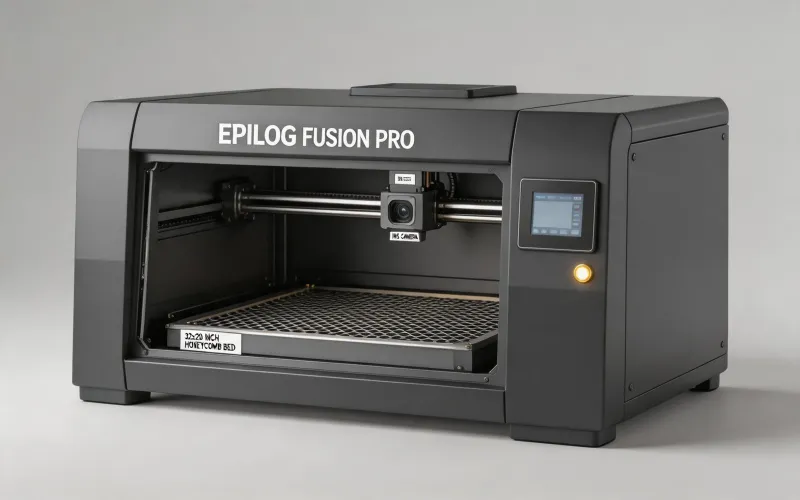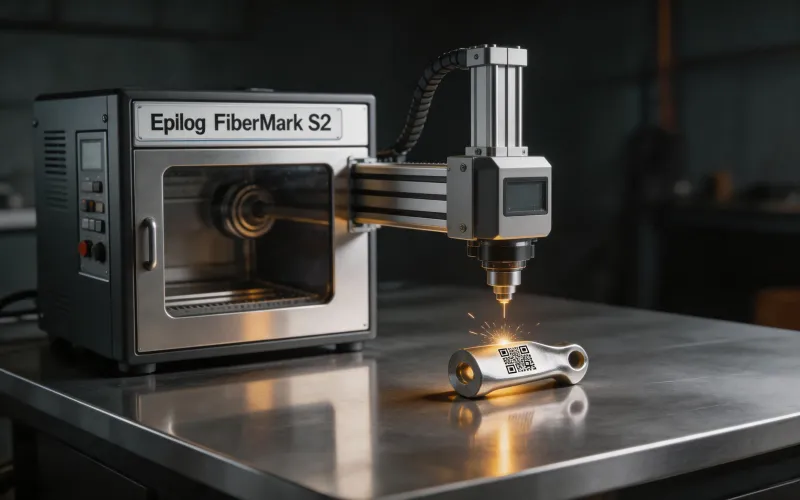
CO2, fiber and galvo engraving & marking systems with published beam-stability data, FDA-registered safety envelopes, and a Golden, Colorado service depot that ships parts to continental US sites in 48 hours.
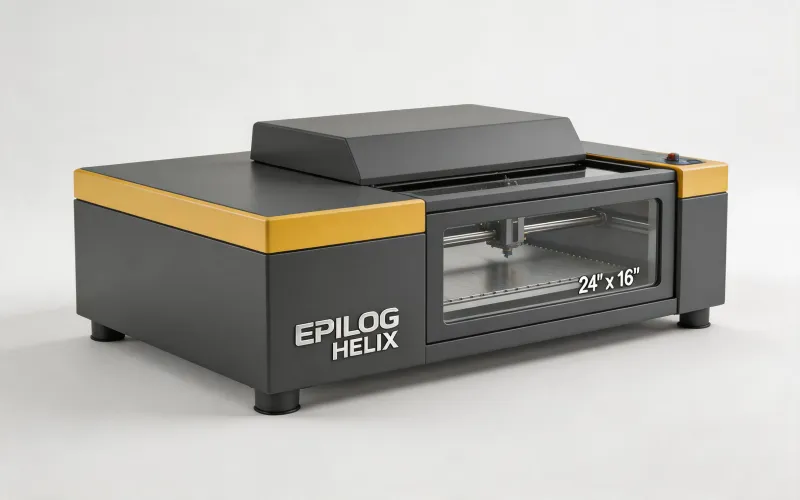
Every Epilog laser engraver ships with its own serialized test sheet documenting power output, beam uniformity, and raster repeatability measured during final QA in Golden, Colorado. Pick a platform by bed size and source — not by marketing tier.
Epilog publishes the block diagram for every laser head we ship, plus the measured short-term power stability envelope. The four values below are typical for Fusion Pro Class units during the 8-hour duty cycle.
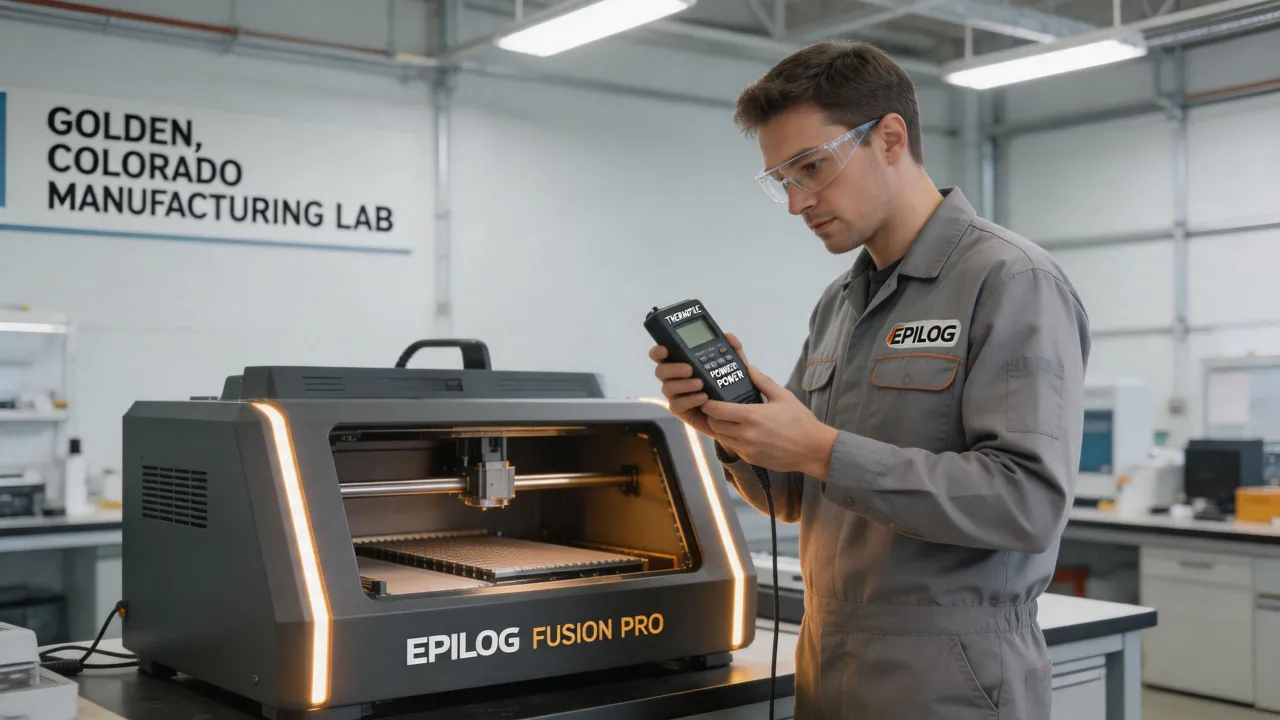
Every Epilog laser engraver is characterized after final assembly using a thermopile calibrator and a profiling camera. The serialized test sheet ships inside the cabinet — readable before the machine is installed on your floor.
Read the engineering overview ›Over 8-hour duty cycle, CO2 sealed RF tube, steady-state.
Fiber source single-mode, 1064 nm, IPG-characterized.
FiberMark S2 marking speed, single-stroke vector.
Fusion Pro, native (no interpolation) across bed.
Every system is designed, assembled, and QA-tested in Golden, Colorado — not relabeled from an OEM import.
FDA/CDRH 21 CFR 1040.10 + IEC 60825-1 enclosure on every Helix, Fusion Pro, and FiberMark unit shipped.
Power stability < ±2%, M² characterized per class. Data sheets ship serialized with each machine.
Golden-stocked SKU inventory ships same-day to continental US; regional depots handle international RMAs.
Application engineering isn't an add-on — it's how we spec each machine. Below are six of the most common industrial use-cases with published power/speed recipes in the Epilog Materials Library.
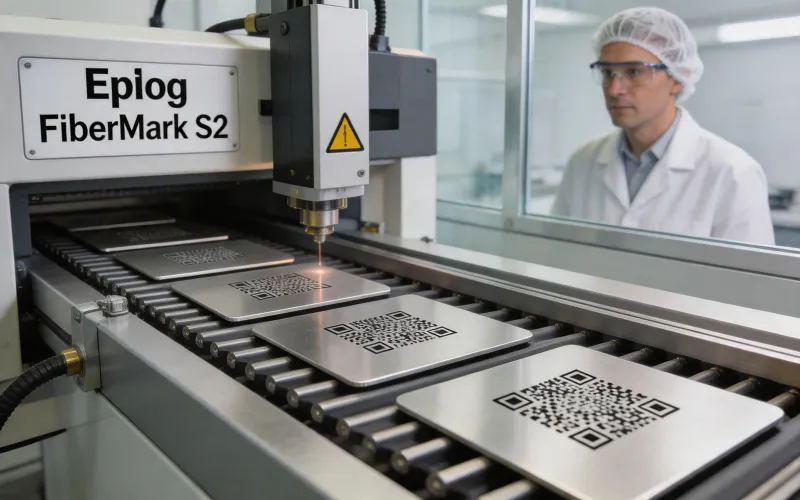
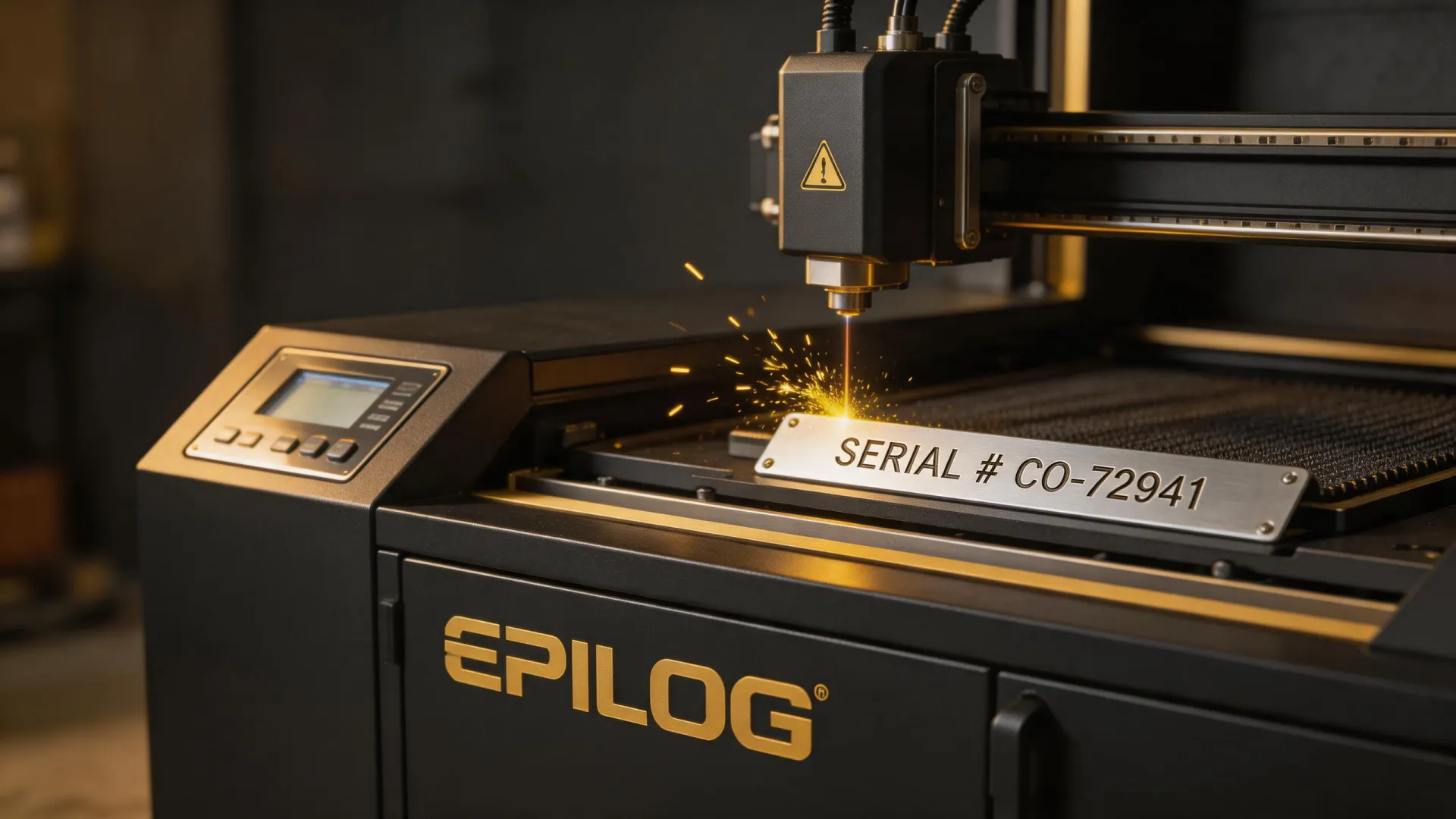
FiberMark S2 on anodized aluminum / stainless — UDI, 2D DMX, serialized nameplates for medical and aerospace OEMs.
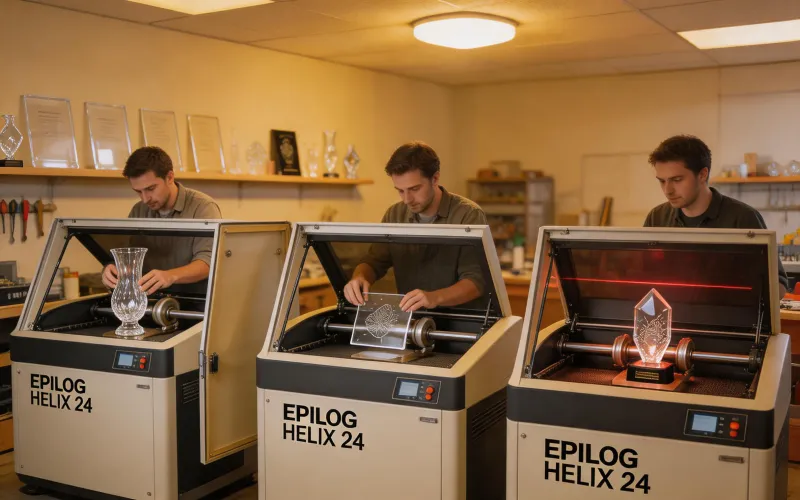
Helix 24 on acrylic, wood, leatherette — the most installed configuration in North American awards production.
Fusion Pro 48 cutting acrylic letterforms up to 12 mm, engraving ADA-compliant braille in a single setup.
University maker-spaces and in-house industrial design teams run Fusion Pro for high-mix, low-volume proofing.
FiberMark on coated receivers and Cerakote finishes — documented to meet ATF marking requirements.
Fusion Pro embedded in automated lines via pass-through door, foot pedal input, and I/O handshake.
Every Epilog laser machine runs a two-hour burn-in, a beam-profiler sweep, and a raster repeatability test before it leaves our facility. This walkthrough shows the exact sequence.
A mid-sized device manufacturer integrated a FiberMark S2 into an existing anodized-aluminum nameplate line. The 21 CFR Part 11 audit trail was built using Epilog Job Manager logs.
A family-owned awards shop doubled its seasonal throughput by pairing Helix 24 units with Epilog rotary attachments. Power/speed recipes from the Epilog Materials Library removed trial-and-error calibration.
Sealed-tube CO2 laser technology removes the consumable gas supply chain of flow-tube lasers, and Epilog's sleep-mode control cuts standby draw to under 40 W. Published values below are from Epilog's internal engineering tests; independent verification on request.
Sleep-mode draw on Fusion Pro / Helix models, measured after 20-min idle.
CO2 sealed RF tubes are factory-refurbished and returned to service rather than landfilled.
Applicable electronic sub-assemblies meet EU RoHS substance restrictions.
Send a material sample and a throughput target — our Golden, Colorado application engineers will return a power/speed chart, recommended configuration, and a verified spec sheet within one business day.