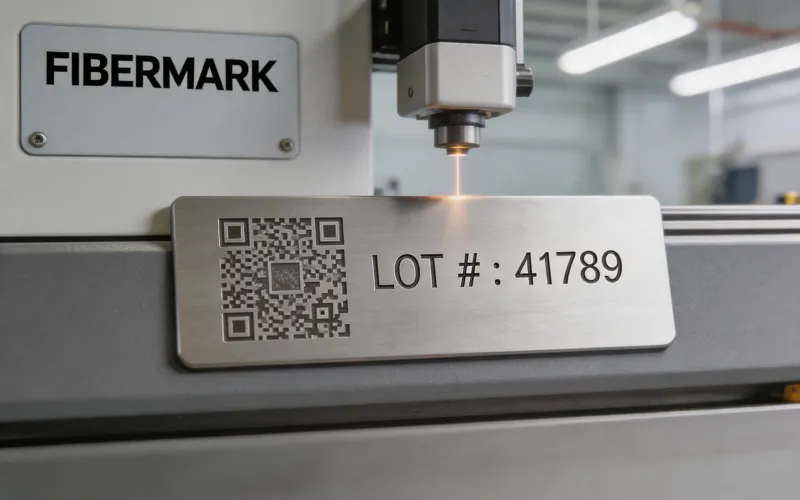
Every material below has a published power/speed recipe for each laser source we ship. Values are measured in the Golden, Colorado application lab against a reference sample. Treat them as a starting point — your substrate's coating stack may shift results by 5–15%.
Mark white, dark, or contrast-etch. Fiber 20W MOPA at 60–80% power / 300–600 mm/s produces ISO-readable 2D DMX on Type-II anodize in < 4 seconds per code.
FiberMark S2 color-marks 304 / 316 with pulse-tuned annealing. Q-pulsed marking on carbon steel reaches > 0.15 mm depth without discoloration at 30 W.
Helix 24 and Fusion Pro cut up to 12 mm with air-assist on. Flame-polish edges are standard on cast acrylic; extruded produces whiter edges but uneven finish.
Maple, cherry, and baltic birch plywood engrave cleanly with CO2. Char reduction via air assist recommended; never process PVC or chlorinated laminates.
Vegetable-tanned full-grain engraves with a clean relief; chrome-tanned produces acrid fumes and is not recommended. Leatherette used widely in awards trim.
Cerakote, laser-markable anodize, and brass-lacquer coatings each have a documented recipe. Fiber sources remove coating selectively; CO2 sources mark only color-reactive top-coats.
FiberMark S2 + 50 W MOPA marks 0.05–0.08 mm deep on titanium Ti-6Al-4V within AS9100 part-identification protocols. Ink-free marks survive passivation.
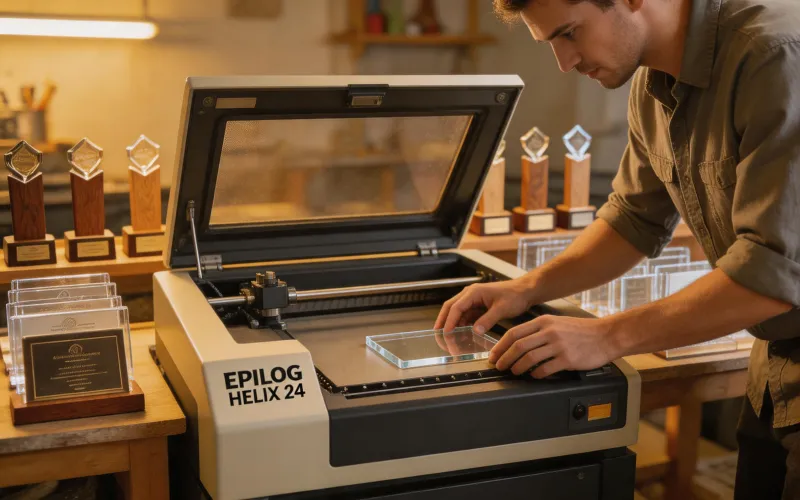
Helix 24 with the Epilog laser rotary attachment handles crystal, acrylic, wood, brass, and leatherette in a single shift. Operators switch jobs in under 2 minutes using Epilog Suite job queueing.
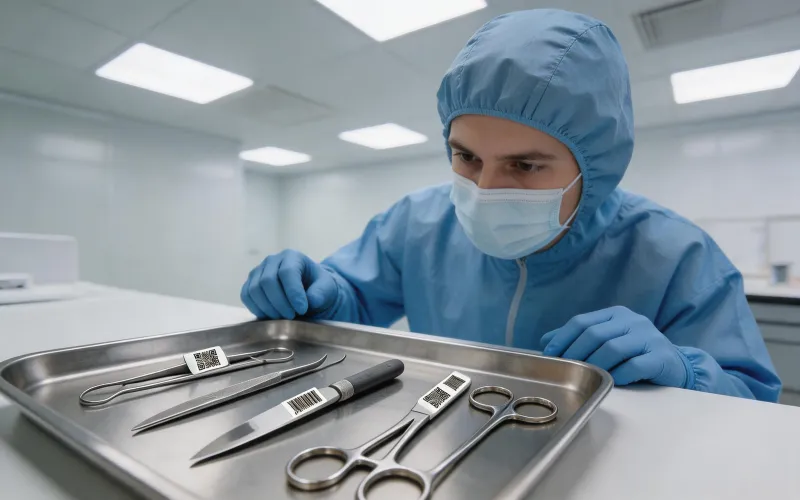
FiberMark S2 produces dark annealing marks on 304/316L stainless without perforating the passivation layer. Deployed alongside 21 CFR Part 11 audit trail in Job Manager.
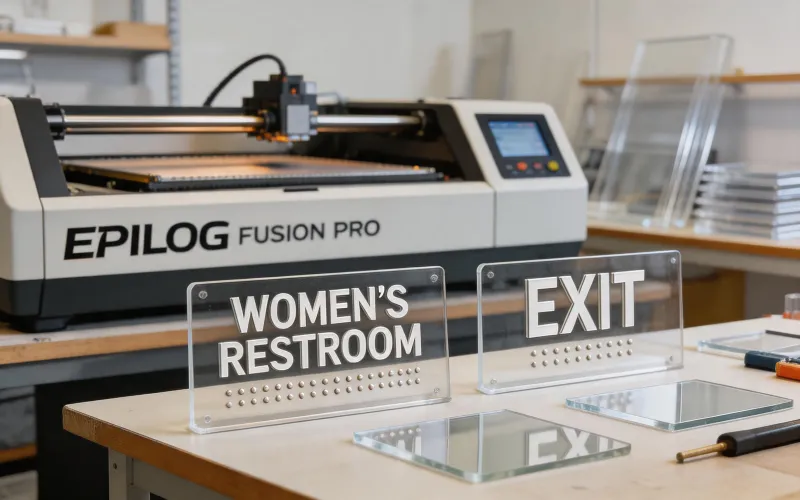
Fusion Pro 48 cuts acrylic letterforms and engraves Braille dots to ICC A117.1 geometry in a single setup — no second-pass CNC routing.
Ship us a piece of your production substrate. Our Golden application lab returns a power/speed recipe sheet plus a marked/engraved sample with a characterization report.